
Artikkel ifb. med WebWineWriting 2023 Hungarianwines.eu
I met Andrej for the first time in the Demeter section of the Austrian wine fair VieVinum one fine May day in 2022, the beautiful colors of his transparent wine bottles attracting me like a bee to a flower meadow. It turned out to be a fruitful and tasty meeting with a committed Argentinian winemaker.
Alpamanta
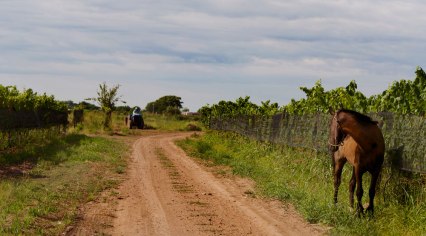
There are three dedicated men behind the Argentinian wine house Alpamanta; Andrej Razumovsky, Andrè Hoffmann and Jèrèmie Delecourt, all with European backgrounds. They are joined by Christophe Chartier as manager, Victoria Brond as winemaker and Ricardo Garcia as agronomist. They started from scratch, planting new vines in a Single Vineyard style on virgin soil in Ugarteche in Lujàn de Cuyo in Medoza in 2005. At the time, no one was talking about either organic or biodynamic wine production in the area, so it’s safe to say that Alpamanta and Andrej were pioneers in this field. Andrej tells me how hard it was to convince the workers about this mentality in the beginning.
The first vintage produced was 2008, starting with a fairly traditional style of wine. In 2015, they received a visit from Europe, and with it a small revelation. The visitors really liked the experimental wines they were «playing» with in the cellar… Once again, they did what few have done before them; focusing on natural wine and Pet Nat in Argentina. Today they have 35 hectares of biodynamic vineyards at 950 meters above sea level and get clean water from the Andes to balance the dry earth wich is a mixture of sand, clay and lime.
 Andrej Razumovsky
It’s not always easy to make a connection with the person behind the table at big wine fairs – there are a lot of people, a lot of noise and a lot of wines to get through. Half Danish, half Austrian Andrej was one of the few people I had a long talk with at VieVinum last year. He told the interesting story of working in finance and ending up making wine. Like many other stories, it had a woman (and love) involved. He met his future wife on a work assignment in Buenos Aires. He stayed, of course, and together they embarked on new adventures in 2001. The idea of a wine house was also quite classic, they drank wine with a visiting friend from France, the aforementioned Jèrèmie, and wondered why on earth they didn’t just make the wine themselves… No sooner said than done, Andrej’s cousin Andrè from Switzerland also joined the boutique adventure.

«I will never forget the first time we did our biodynamic applications and our oldest vineyard worker was looking at me with disgust, as he had to fill the cowhorns with manure and did not understand at all, why he was doing this work task.» -Andrej
Ecology and biodynamics
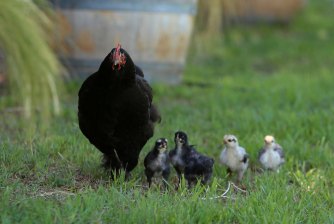
The winery follows Rudolf Steiner’s philosophy, based on the idea that «everything is connected»; flora, fauna, the earth, animals, insects, humans and the cosmos. They keep chickens, geese, cows and sheep on the farm.
Of course, being biodynamic means that they do not use any chemicals, they use compost as fertilizer, the classic biodynamic horn with 8 different ingredients with plants, animal feces and minerals in the vineyard and follow the lunar calendar to know when to perform the different tasks in the vineyards. Their cement storage is in egg-shaped containers, they use only local and natural yeast, and as little sulfate as possible and only natural filtration. They use organic packaging to reduce the carbon footprint of both packaging (recycled paper) and bottles (lightweight bottles). The winery is DEMETER (biodynamic) and ARGENCERT (organic) certified.
 The owl in the logo is a symbol of wisdom and the natural protector of the vineyard.
The wines
They have divided their wine production into six categories: Natal, Breva, Alpamanta, Estate, Campal and Terroir.
Natal is the line of wines that focus on the grape and grape typicity. «Friendly, fresh and easy to drink wines»
Breva means «the fruit of the first harvest» and consists of wines with hand-picked grapes that are spontaneously fermented on the skins with natural yeast in amphora, then bottled unfiltered. True natural wine. (Both still wines and Pet Nat (produced on mèthode ancestrale)).
Alpamanta is a line of wines that have undergone spontaneous fermentation with natural yeast, fermented on cement and then aged in different barrels.
Estate consists of complex and elegant wines with selected grapes, like the others, produced with natural yeast and aged for 12 months in barrels.
Campal is a single wine that is meant to represent the diversity of flowers, plants, herbs and insects on the farm.
Terroir is the top wine of Alpamanta, it comes in a limited edition of 3500 bottles. The original was a Malbec, which has now been joined by a white wine made from Sauvignon Blanc.

Alpamanta – «Love of the earth» in the local language.
To stand out
Alpamanta stands out. When it comes to the local Malbec grape, for example, they harvest six weeks earlier than usual, resulting in the interesting wine Campal Malbec.
Not many people grow Grüner Veltliner in Argentina either, but its no surprise when you combine Austrian tradition and Danish innovation.
As previously mentioned, they have also distinguished themselves with natural wine and Pet Nat production, and one can only applaud the initiative and courage to pursue a path few have gone so far in Mendoza and Argentina. They now export to 30 countries, all of which want a taste of Alpamanta’s colorful wines!
The wines of the winery are like a varied bouquet of flowers, some are complex and deep, others concentrated and fresh, some are easy-going and great to enjoy in the sun.

The full Norwegian version, wine reviews of all the wines and an article about Rudolf Steiner (crazy or a genious) you will probably find very interesting can be found on the online magazine VinArena.
 Vinhøna